Welcome to WordPress. This is your first post. Edit or delete it, then start writing!
Blog
-
Work-Life Balance
The 4-Day Work Week at MTO Nursery: Our Ongoing Experience
At MTO Nursery, we operate a 4-day work week for our Early Years practitioners. This structure
has been in place for some time, giving us a realistic understanding of how it works in
practice—what it supports, where it helps, and where it still needs careful management. The 4-day
week isn’t a trend for us; it’s part of how we run our setting. And like any working pattern, it has
benefits as well as challenges.Why We Use a 4-Day Week
The Early Years environment is demanding, physically and emotionally. Our aim has always been
to create a working pattern that helps practitioners balance their role with their personal life, while
still keeping stability and consistency for the children.What Works Well for Many Staff
Over time, several practitioners have highlighted genuine advantages: more recovery time, better
work–life balance, improved energy, and a calmer atmosphere.Challenges We Continue to Monitor
A 4-day week comes with trade-offs: longer shifts, workload pressure, communication gaps, and
ongoing rota balance challenges.Impact on the Nursery and the Children
Our experience shows a mixed picture: many staff report improved wellbeing, some feel neutral,
and a minority find longer days challenging.
Why We Share This Openly
Recruitment in Early Years is competitive, and many practitioners want workplaces that genuinely
consider their wellbeing. Sharing an honest picture helps potential staff understand what to expect
— both the positives and the realities.Thinking of Joining MTO Nursery?
If you are curious about whether a 4-day week would suit you, we are always happy to discuss how
the rota works and what support is available. -
Finding Meaning in the Festive Season at MTO Nursery
Looking Beyond the Tinsel
At MTO Nursery, we often observe how quickly the festive season becomes filled with
noise—tinsel, presents, colourful displays, and the excitement that children naturally feel at this
time of year. While these outward celebrations bring joy and sparkle, they can also overshadow the
deeper message that occasions like Christmas were originally meant to convey.
Returning to the Essence of Christ Mass
As we approach Christmas, we feel it is important—not only as educators but as guides in each
child’s early development—to pause and reflect on the true significance of this season. The story of
the birth of Christ, or Christ Mass, represents far more than decorations and gifts. It is a reminder of
humility, kindness, compassion, and the arrival of a light into the world.These are values that children can understand deeply when presented in a gentle and meaningful
way. At MTO Nursery, we aim to help children look beyond the surface and find the essence of
what this celebration symbolises.Questions That Inspire Reflection
We encourage children to explore questions that nurture thoughtfulness and inner awareness:- What does it mean to bring light to someone’s day?
- How can we show kindness, even in small ways?
- Why is humility such an important part of the Christmas story?
The Universal Thread Through All Festive Seasons
Although many cultures celebrate different festivals throughout the year—each with its own
beautiful traditions—their core messages often overlap with the spirit of Christmas. They speak of
light overcoming darkness, the importance of community, gratitude, and the power of kindness.
In this way, Christmas becomes part of a much larger human story: the search for meaning,
connection, and inner growth.A Season for Inner Discovery
As we celebrate at MTO Nursery this year, we hope to guide our children gently toward these
deeper understandings. Our activities, stories, and discussions highlight that festive seasons are
not merely moments of outward excitement—they are opportunities for each child to discover
something beautiful within themselves. -
Curriculum Through the Eyes of the Child
Dear Reader,

After attending a professional discussion on ‘the curriculum through the eyes of the child, we have discovered many ways in which the world has changed and how this is affecting children’s learning; technology has taken the world by storm the last twenty years, and the way children learn has had to follow along.
What is a curriculum: a curriculum is a ‘subjects comprising a course of study’ definition from oxford dictionary. But what does this mean for early years?
Early years curriculum must follow the seven areas of learning set out by the EYFS (early years foundation stage). Ensuring all children have clear goals set for them and making them achievable by the end of the foundation stage.
The EYFS gives us the seven areas of learning to guide activities we present to children. However, children need specific engagement and a well thought out curriculum to fully take advantage of the activities and resources we intend for the children to learn from.
Children are naturally curious and are little detectives! Our role is to engage and create activities with the children’s interests in mind. How can we do this? Well…

- Creating an enabling environment: Children will engage better with a well thought out room layout which is purposed for learning. An example of this would be having all the furniture at children’s level so every resource is easily accessible for them.
- Purposeful planning: Creating activities and set ups inspired from the idea of getting children engaged in self-learning.
- Understanding of the individual/cohort of children: Having a good understanding of the children in the setting is particularly important because not every child has been exposed to the same experiences and learning opportunities, having knowledge of this allows us to plan a curriculum for the child.
- STEAM (Science, Technology, Engineering, Arts and Mathematics): We give children time in the year to explore STEAM, creating masterpieces and exploring the new world of technology and science to help their general development and understanding of the world.

The MTO Goal
Here at MTO we stive to help children achieve their full potential through a well-planned curriculum and giving the best possible opportunities and experiences to learn from. We understand the importance of each child’s learning, so we have implemented a curriculum that fits all the children’s needs, because we care, we communicate the best we can with our parents ensuring we gain the best possible understanding of each child as to incorporate their interests in our curriculum.
-
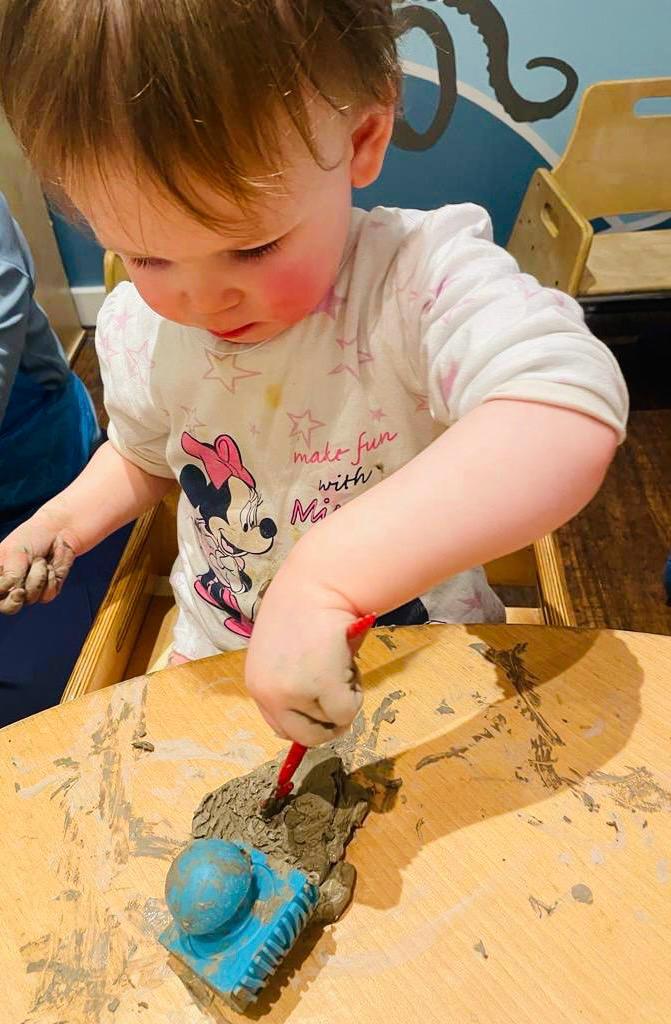
Play and Clay
An integral part of life is continuous learning! As empowered role models at MTO Nursery we promote the freedom to feed our creative spirits.
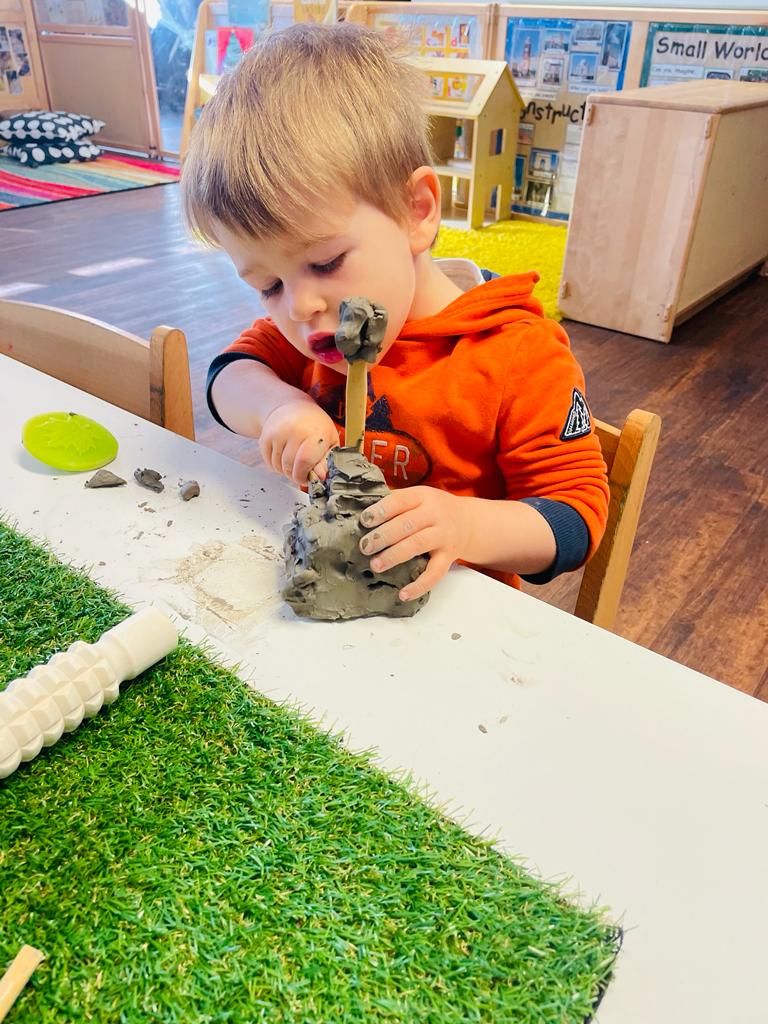
Joining the Clay Project hosted by the Haringey Early Years Team introduced us to the joys of clay in completely different ways. A number of intriguing topics were brought to our attention, opening up an array of exciting possibilities for our nursery children and since we strive to modernise our teaching techniques as often as possible, we’ve jumped on board!
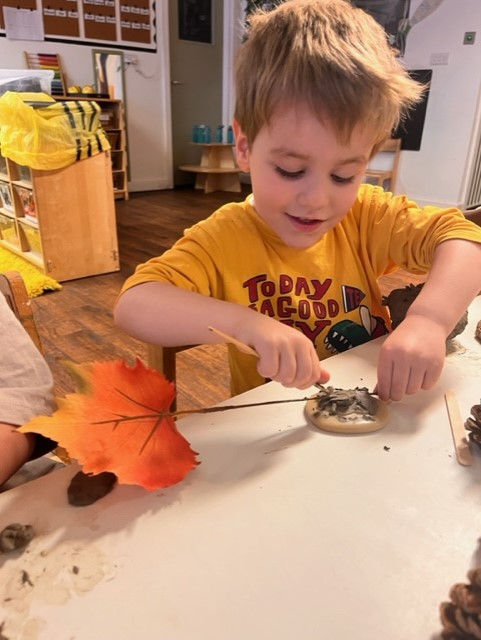
The project allows for this in a natural and experimental way. Clay has a beautiful malleable quality, which is inviting to most children. The value of clay play can be immense if executed with the child in mind. Since the product is reuseable and natural pieces can be added to exploration, it is an eco-friendly material with low levels of maintenance. Simply just add a cup of water and storage in an airtight container till next time.
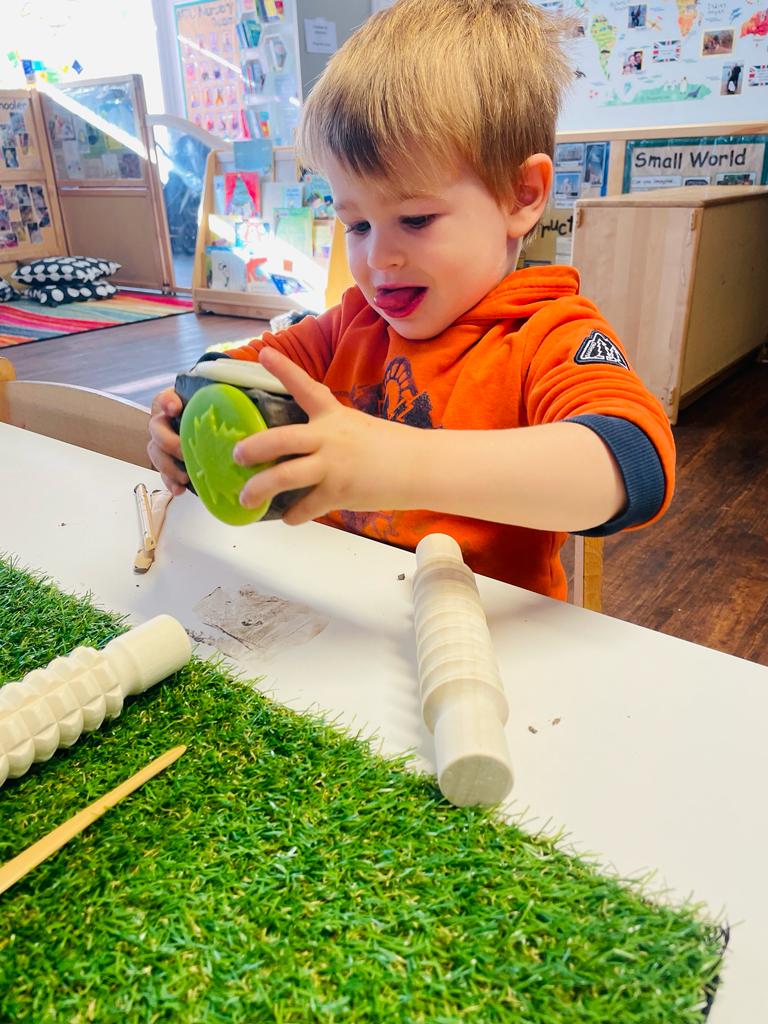
Providing a large mass of clay in the centre of a table or on the ground allows for free exploration, which children need to develop their understanding, problem solving and ideas. The benefits of clay are vast and run holistically across the different areas of learning. Whilst manipulating the clay, muscle strength is increased improving dexterity and co-ordination. Children who engage in clay activities are likely to develop good concentration skills, along with fine motor movement. Mathematics can be scaffolded as children begin to foster skills such as pattern making, identifying 2D & 3D shape and discovering weight and size.
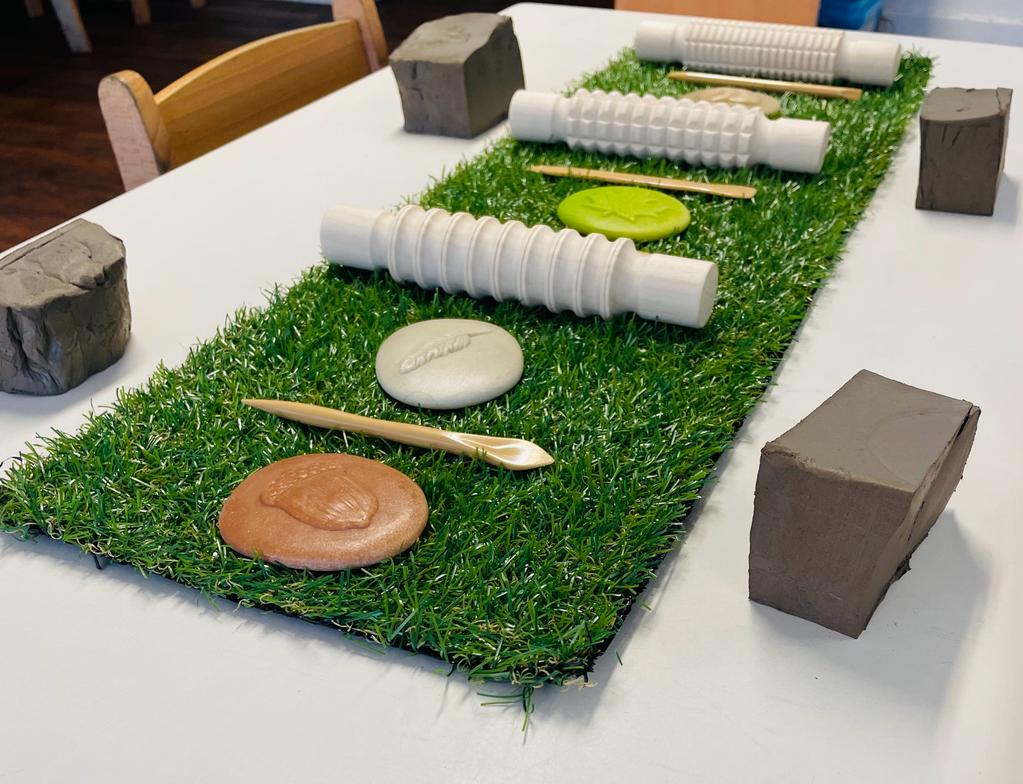
The project’s objective is to also be incorporated as communication tools, allowing non-verbal children to share their interpretations through clay, expressing their experiences and thoughts. Words such as twist, pinch and pound are introduced to build vocabulary during sessions. Once the foundations of a conversation are constructed, practitioners can provoke further ideas by using open questions and modelling techniques.
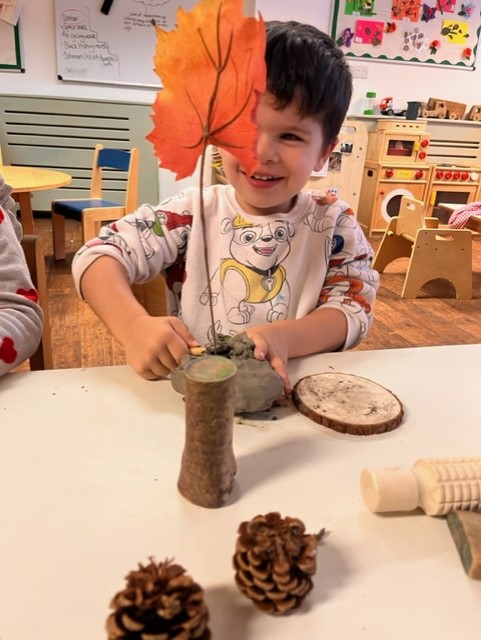
Researching all the potential that clay has to offer has given the nursery a new outlook on the way we present, share, and communicate with our children. Further projects have since been born as a platform of expression and charity, such as the MTO Art Exhibition & Auction. Clay will soon be a featured area in our preschool and toddler room, we can’t wait to see the outcome that arise from its presence!
-
Every parent’s wish is for their child to be happy and healthy.
Every parent’s wish is for their child to be happy and healthy.
Recently we’ve been lucky enough to host an open discussion with our nursery parents and our professional colleagues, discussing everything from biting behaviours to exploring emotions. We know that different stages and phases of development can affect us in different ways, knowing how to manage this can be vital to a peaceful environment be it home, nursery or big school!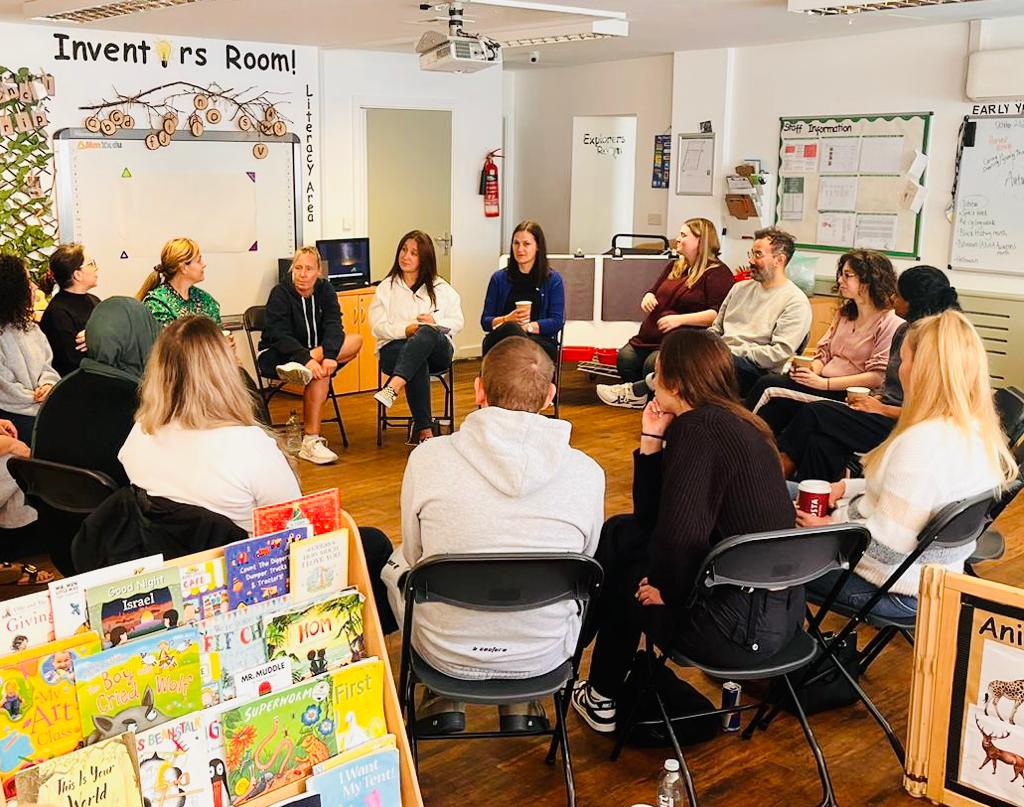
Discussing a range of challenging behaviours encouraged us to be reflective on our own practice as well as hearing the parent point of view, the reflective examples indicated how these behaviours can make us feel anxious, worried, or unskilled particularly when these behaviours are in the glare of public! Many reasons can provoke behavioural outbursts, just feeling tired, hungry, feeling upset, limited language & communication, coping with change, or just simply wanting your attention are just a few…for children it can sometimes be the only way that they can express themselves.
Our training and experience tell us that children struggle to process their emotions in their early years and finding the ways to self-regulate, as adults we must acknowledge that it is okay to have feelings that may result in behaviours that are challenging to deal with by supporting children through the processes. We can help by recognising and naming the emotions by name and making a tranquil space available for children to go to and calm from the turbulence they’ve just experienced or are experiencing.
The natural instincts of adults is to wonder ‘what’s wrong’ when children begin to display tricky or behaviours that are outside of what is assumed as the ‘norm’ and therefore, we begin pigeon-holing children as autistic or suffering from ADHD. Attention Deficit Hyperactivity Disorder known as ADHD is assessed in children in later than their early years usually between the ages of 6-7yrs. We touched on this topic during our discussion briefly and by the end of it the behaviours we talked about were just typical early behaviours which are seen in children between the ages of 0-5yrs. The types of behaviours that are characteristically linked with ADHD in young children can be the difficulty concentrating (keeping focused) – flitting attention, trouble sitting still, random bursts of emotions/tantrums, difficulty with social play skills…
Haringey SEND (Special Educational Need & Disabilities) Support Services work closely with the families to provide support to improve their educational and well-being outcomes so that each child meets their potential. The ser-vices offer a free 40-minute consultation with an education psychologist, the consultations are for parents who have concerns about their child’s development, learning, emotional well-being, or behaviour. To book a free con-sultation you can book via this email familyadmin@markfield.org.uk
For more information about Haringey’s SEND services Educational Psychology Service (EPS) | Haringey CouncilDiscussions and debates about behaviour will be a continuum, we are glad to be able to support children by setting some positive and sound foundations for them at MTO Nursery, so that no matter what the potential is for our bundles of joy the fundamentals have been set to achieve them!!!
It is important to remember that our behaviour is a reflection of the world around us! With this in mind we will continue to aim for children: To feel happy and secure at Nursery, to feel good about themselves, to respect each other and their surroundings, to develop independence and an enquiring mind… -
Holistic Development
”Holistic development involves the growth and development of an individual as a whole, including
physical, emotional, social, intellectual, and spiritual aspects. It recognises that each of these aspects
is interconnected and equally important in achieving overall well-being. Focusing on holistic
development can lead to a more balanced and fulfilling life.”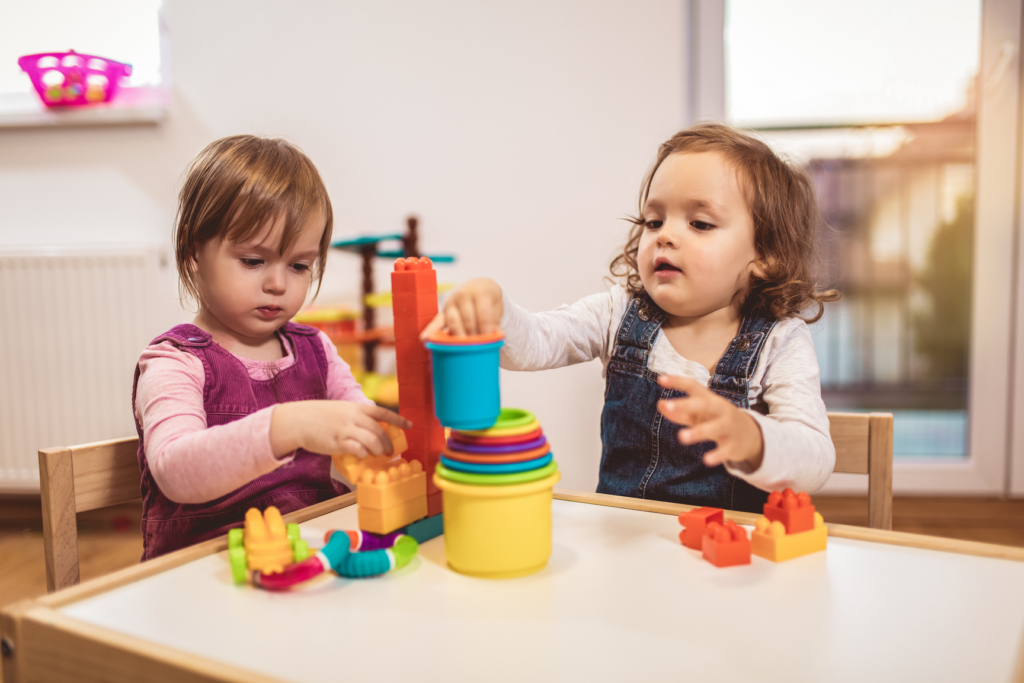
All children are unique and special in their own way, and it is essential to know that children and
young people follow a development pattern.Child’s Development
To analyse children’s and young people’s development, it is critical to understand what the term
development means.
The term development refers not to the physical growth of children but to the skills and knowledge
they are developing. To understand further a child’s development, we divide into the following areas:
Aspects of development
Cognitive and neurological child development: it is an area that encompasses the way the brain
processes information. Being able to remember someone’s name or being able to distinguish two
different colours is an example of cognitive skills. Cognitive development is strongly linked to
communication and language development.
Speech, language and communication development: this area refers to learning to communicate with
others and understanding their communications. Talking, reading, writing and gestures are all linked
to this area. Communication and language development are linked to cognitive development because
more sophisticated touch involves thinking about what others are thinking and trying to express.
Physical development: This area includes all bodily movements. Physical development helps children
to gain independence. This specific area is divided into fine motor (tying shoe laces) skills, gross
motor skills (throwing a ball) and locomotive movements (balancing and walking).
Emotional and social: This area is about relationships and understanding and is linked to cognitive
and language development. Emotional and social development refers to controlling emotions and
being able to understand what is acceptable and unacceptable behaviour.
Development is holistic.
It makes sense to separate areas of development. Still, it is essential to understand that children are
whole people and don’t develop their skills separately but co-dependently.
A holistic approach to child development means understanding that the child’s physical, personal,
social, emotional and spiritual well-being is interconnected. By making this assumption,
practitioners focus on the child’s development as a whole rather than focusing only on the cognitive
aspects of learning.
A holistic approach is essential when planning and assessing the needs of a child. It allows us to
determine the child as an individual and understand what they have achieved and have not achieved
by looking at how the developmental areas link up and how progress in one area can affect progress
in another. For example, a child can use a spoon (physical), which leads to greater independence and
increased self-esteem (emotional).
This approach allows early learning and childcare workers to plan for future activities involving the
child, which will help their overall learning, development, and well-being.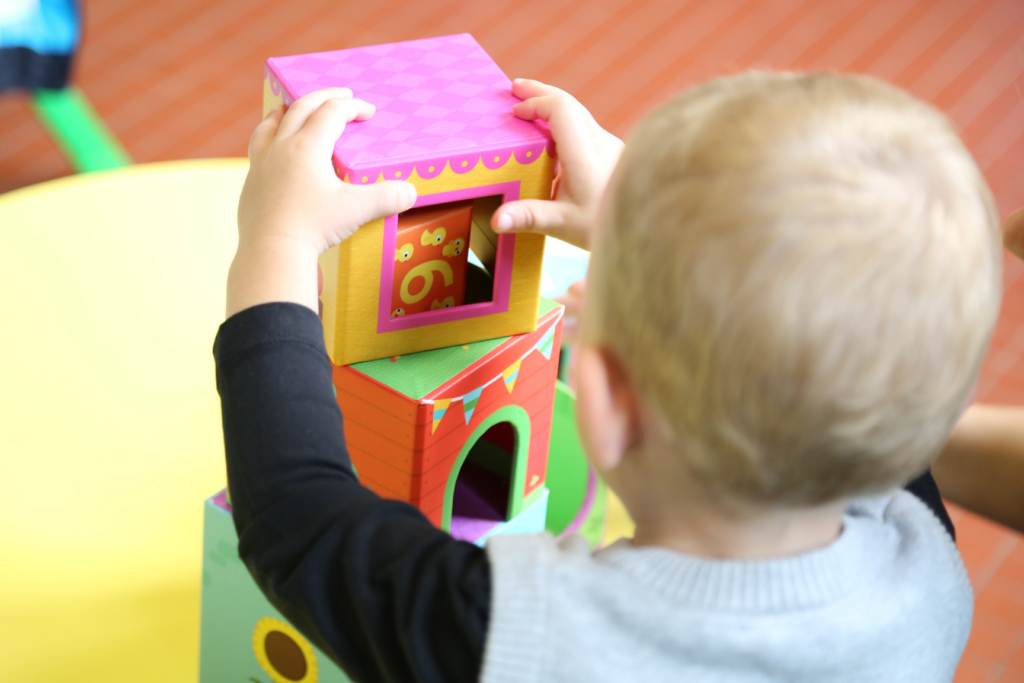
Benefits of the holistic approach in early years
Meaningful teaching
A holistic approach should consider the child’s whole life and environment. Being rigid can prevent
natural learning.
Interconnected learning
While every aspect of development is connected, learning is happening simultaneously.
Potentiality
The holistic approach is imperative for exposing children to opportunities to find and develop their
strengths to the best of their abilities and strengthen their weaker skills.Holistic learning at MTO nursery

Our nursery considers the holistic approach to children learning and development. Our early years’
practitioners are trained to plan and organise various creative activities to support children’s
development depending on children’s interests and individual needs.
Following are some activities in our setting to support children while they improve and develop their
skills.- Sensory play
- Nature walks
- English sessions
- Singing
- Circle times
- Yoga session
- Baby massage and relaxation
- Free flow
- Messy play
- Art sessions
Contact our team or speak with staff for more information about holistic learning in the early years.
-
How To Build A Healthy Relationship With Your Child’s Teacher
We are committed to working with the parents as partners. The healthy relationship with the parents and carers positively impact the child’s learning and development.
Our doors are always open for a formal or informal chat. Your child’s key person or management welcome you to answer any questions. We engage with parents and ensure that they are actively involved in the decision-making aspect of their child’s development.
Parents have the empowerment from the very beginning to make choices and inform us of the decisions. We value and appreciate parents as much as the children attending MTO Nursery.
Our practitioners create meaningful transitions at the beginning and end of the day, we show a level of sensitivity as parents say hello and goodbye.
We consider ourselves lucky that all of our parents are enthusiastic and willing to engage with us. Every room in the nursery has a specially designed board where you can find photographs of our students and their parents.
The importance of the Key Person
When settling in, you will meet your child’s key person. During that time, the practitioner will discuss your child’s routines, their likes and dislikes, and other essential information regarding your child.
We believe that children settle best when they have a key person to relate to, who knows them and their parent well, and when the individual needs are met. Every key person provides healthy relationships in which children thrive, and parents feel secure and confident.
The key person will provide daily feedback and keep a record of your child’s learning journey, and together with the parent or carer, will plan and implement a guide for the child’s learning and development.
When a child is ready to leave the nursery and go to ‘big school’ the key person will be responsible for writing a summary of the child’s development. The summary will focus on the prime learning and development areas of the Early Years Foundation Stage.
Tips for building a stronger parent-teacher relationship
It’s essential to remember that trust is the most crucial component. Consistent and open communication from both parties is beneficial for a robust relationship.
Establish a relationship early
You should spend a few minutes with your child’s key person from the start of the school year. You should get to know about their background and ask as many questions as you wish. Our practitioner’s welcome parents and carers wholeheartedly, and we go the extra mile to make them feel comfortable to speak openly.
Practice healthy communication
You should address any critical issues or concerns as they arise. Don’t let the annoyance to build up. Sometimes, we get angry without knowing all of the facts of the situation. Most importantly, you shouldn’t show your anger or confront the practitioner in front of the child. Instead, you should set up a convenient time for both parties to discuss the issue at hand.
Research shows that children thrive, not only when they’ve made a secure attachment with the key caregiver, but also when the parent and practitioner show a good working relationship based on trust and respect.
Set expectations
As a parent or carer, you have the right to expect updates from the child’s key person and timely notifications. Hence, at pick-up, your child’s teacher will have an informal conversation with you regarding how the day has been, what activities took place, and any other relevant information.
Conclusion
We strongly believe in parent partnership. It’s one of our values. Understandably, not all parents will have time to engage in daily conversations with the child’s key person. Thus, we use a range of tools to support regular two-way communication.
We recognise parents as the most enduring educators of their children, thus, making them a focal source of information. For instance, we share every milestone, details about daily activities, and meal times through the daily communication diaries.
-
How We Help Children to Become Self-confident Individuals
At MTO, we aim to empower children through a play-based curriculum. The planned activities will encourage independent thinking, an opportunity to explore, and diverse experiences indoors and outdoors. Children learn from each other, respect one another, and are taught how to be confident when making decisions.
Our practitioners plan daily activities to develop all areas of learning. We help children to become self-confident individuals as we observe each child individually. Once the observation is over, the practitioner will create appropriate activities to deepen the child’s interests. By taking this action, children will begin to have a positive approach to learning new things.
We encourage the children curiosity by providing them with a range of materials so that they can investigate and explore. This includes experiences outdoors and indoors. Through the help of our practitioners, children are capable to make more links, see more patterns, and make sense of what is around them.
Our work with children covers four themes:
- Unique child – Every child is unique and is continuously learning, capable, resilient and self-assured.
- Positive relationships – Through positive relationships, children learn to be independent.
- Enabling environment – The partnership between the children and the practitioners will meet the needs of the child. All children learn well in an enabling environment.
- Learning and development – Inevitably, children learn and develop at different rates in different ways. The EYFS framework that we follow will cover the educational needs of all children, including the children with special needs and disabilities.
This framework begins from the early year’s provisions and continues through the end of primary school.

How to encourage independence at home
The role of educators and parents in supporting independence and self-confidence is vital. There are many ways that you can encourage this:
Appreciate effort
It’s more important that children ‘have a go’ rather than how good they are at doing it. Such action will encourage the child to complete more tasks on their own and feel good about it. If you believe that there’s room for improvement, you should provide Specific Positive Feedback. For example, the praise should sound like “I like the way you wiped down the table after lunch! Next time, you should try using a cleaner to make it shinier.”
Tell children that it’s ok to make mistakes. Help children to see that everyone makes mistakes, and the important thing is to learn from them. A child’s confidence will grow if they engage in activities so you shouldn’t take away the opportunity for them to learn. As a result, the consistency of trying new tasks will build confidence.
Don’t over-protect
If you do the work for the child, you’re teaching them co-dependence. Thus, it will be challenging to learn how to make decisions confidently. Instead of focusing on tasks that they already excel at, you should diversify tasks. Sometimes, a child’s endless streams of questions can be tiresome, but it should be encouraged.
Inevitably, children will grow more independent as they grow older; as a parent, it’s essential to teach the skills to get there. Such skills will be the foundation of self-confidence. For instance, you should teach children how to brush their teeth or hair independently or get dressed on their own. A pre-schooler should know how to eat on their own by the time they reach ‘big school’.
Let them feel valued
In the beginning, they may complain, but children feel more valued when they’re counted on to do age-appropriate tasks. Provide them with the opportunity to help with the chores or to get ready on their own. Parents can nurture confidence by increasing responsibilities that must be met.
Conclusion
As a parent, you have to embrace imperfection. As adults, we know that perfection in the eyes of everyone around is impossible; thus, it’s important to portray that message to the child as soon as possible. You should celebrate effort and set clear goals. It may take a while to get there, but you have given the opportunity to learn a new skill.
Being confident and independent isn’t about succeeding at everything, every single time. It’s about being resilient enough to keep trying even if the results are not always as expected.
-
Don’t Run Out of Activities During the Christmas Break
With our busy jar idea, you will find enough activities to engage with during the Christmas break. Each activity card will either encourage children to work independently or accomplish a task with your help. You will find that some cards will help spark their creativity, and some will require the child to solve an age-appropriate challenge.
The concept is straightforward. You will need a jar and colour coded paper. Each colour will have a theme so the child can enjoy a range of sensory play. You will need the following tools:
- A jar
- Scissors
- Coloured paper
- Pen
Use the scissors to cut small pieces of paper to fit in the jar. Use the pen to write down ideas and don’t forget to have fun!
We suggest the following:
Orange paper for energetic activities that will require physical movement. The tasks can be achieved alone or with the help of an adult.
Blue paper for food and kitchen-related activities. For instance, the child can help prepare a meal or have a picnic in the house.
Green paper for family activities. Together, you can make musical instruments from items you can find in the house and create your band.
Click here to find a coloured version. All that you will need to do is to print it, cut it, and place it in the jar.