Author: KV

  • Work-Life Balance

    The 4-Day Work Week at MTO Nursery: Our Ongoing Experience
    At MTO Nursery, we operate a 4-day work week for our Early Years practitioners. This structure
    has been in place for some time, giving us a realistic understanding of how it works in
    practice—what it supports, where it helps, and where it still needs careful management. The 4-day
    week isn’t a trend for us; it’s part of how we run our setting. And like any working pattern, it has
    benefits as well as challenges.

    Why We Use a 4-Day Week
    The Early Years environment is demanding, physically and emotionally. Our aim has always been
    to create a working pattern that helps practitioners balance their role with their personal life, while
    still keeping stability and consistency for the children.

    What Works Well for Many Staff
    Over time, several practitioners have highlighted genuine advantages: more recovery time, better
    work–life balance, improved energy, and a calmer atmosphere.

    Challenges We Continue to Monitor
    A 4-day week comes with trade-offs: longer shifts, workload pressure, communication gaps, and
    ongoing rota balance challenges.

    Impact on the Nursery and the Children
    Our experience shows a mixed picture: many staff report improved wellbeing, some feel neutral,
    and a minority find longer days challenging.


    Why We Share This Openly
    Recruitment in Early Years is competitive, and many practitioners want workplaces that genuinely
    consider their wellbeing. Sharing an honest picture helps potential staff understand what to expect
    — both the positives and the realities.

    Thinking of Joining MTO Nursery?
    If you are curious about whether a 4-day week would suit you, we are always happy to discuss how
    the rota works and what support is available.
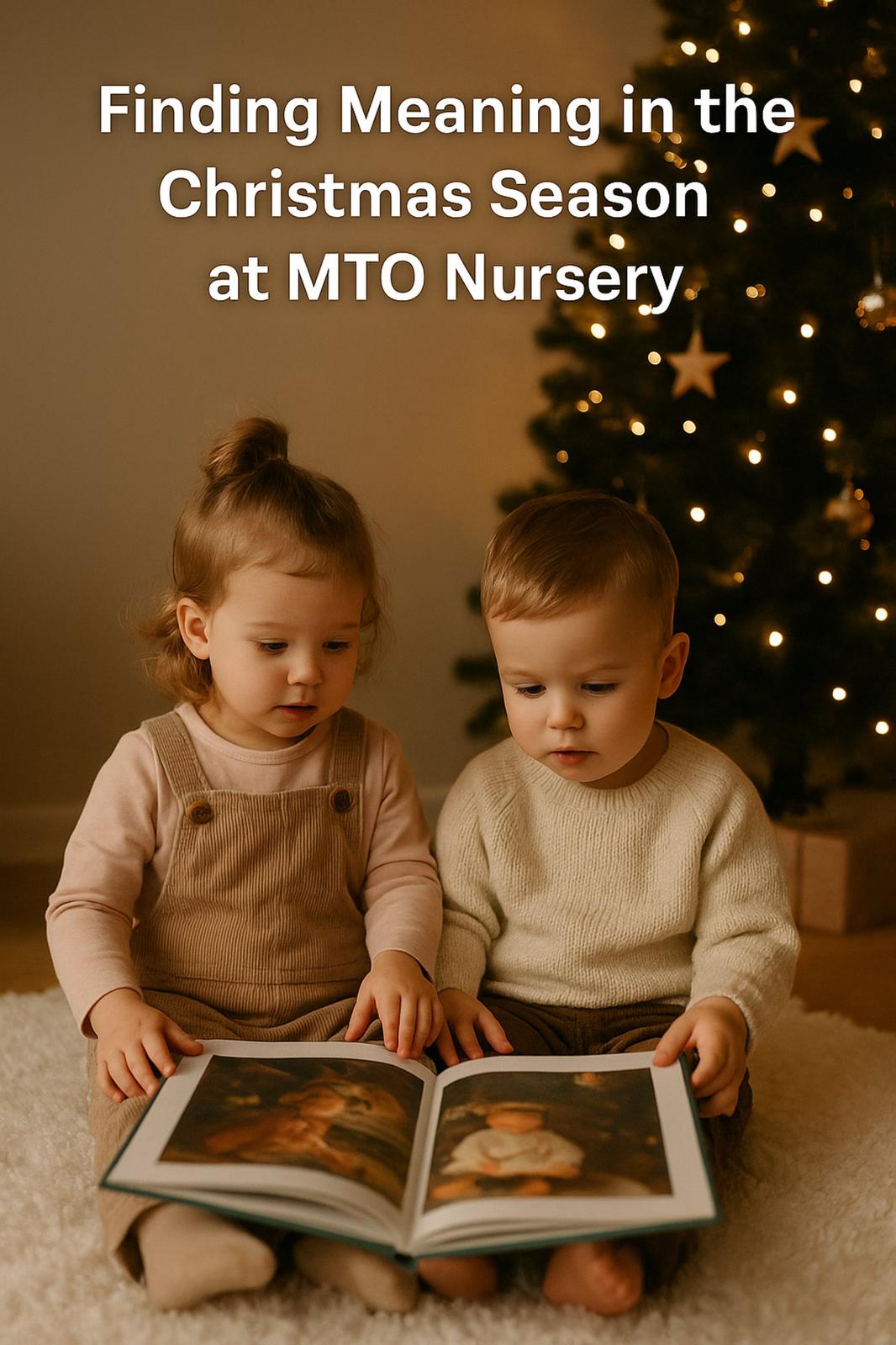
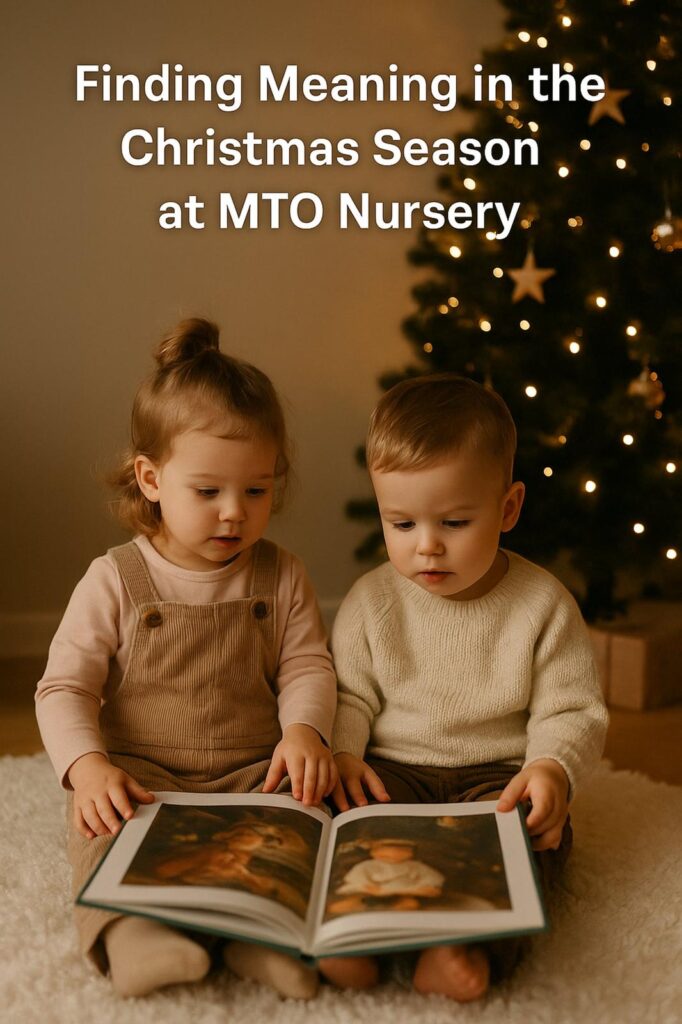
  • Finding Meaning in the Festive Season at MTO Nursery

    Finding Meaning in the Festive Season at MTO Nursery

    Looking Beyond the Tinsel
    At MTO Nursery, we often observe how quickly the festive season becomes filled with
    noise—tinsel, presents, colourful displays, and the excitement that children naturally feel at this
    time of year. While these outward celebrations bring joy and sparkle, they can also overshadow the
    deeper message that occasions like Christmas were originally meant to convey.

    Returning to the Essence of Christ Mass
    As we approach Christmas, we feel it is important—not only as educators but as guides in each
    child’s early development—to pause and reflect on the true significance of this season. The story of
    the birth of Christ, or Christ Mass, represents far more than decorations and gifts. It is a reminder of
    humility, kindness, compassion, and the arrival of a light into the world.

    These are values that children can understand deeply when presented in a gentle and meaningful
    way. At MTO Nursery, we aim to help children look beyond the surface and find the essence of
    what this celebration symbolises.

    Questions That Inspire Reflection
    We encourage children to explore questions that nurture thoughtfulness and inner awareness:

    • What does it mean to bring light to someone’s day?
    • How can we show kindness, even in small ways?
    • Why is humility such an important part of the Christmas story?

    The Universal Thread Through All Festive Seasons
    Although many cultures celebrate different festivals throughout the year—each with its own
    beautiful traditions—their core messages often overlap with the spirit of Christmas. They speak of
    light overcoming darkness, the importance of community, gratitude, and the power of kindness.
    In this way, Christmas becomes part of a much larger human story: the search for meaning,
    connection, and inner growth.

    A Season for Inner Discovery

    As we celebrate at MTO Nursery this year, we hope to guide our children gently toward these
    deeper understandings. Our activities, stories, and discussions highlight that festive seasons are
    not merely moments of outward excitement—they are opportunities for each child to discover
    something beautiful within themselves.

  • Curriculum Through the Eyes of the Child

    Dear Reader,

    After attending a professional discussion on ‘the curriculum through the eyes of the child, we have discovered many ways in which the world has changed and how this is affecting children’s learning; technology has taken the world by storm the last twenty years, and the way children learn has had to follow along.

    What is a curriculum: a curriculum is a ‘subjects comprising a course of study’ definition from oxford dictionary. But what does this mean for early years?

    Early years curriculum must follow the seven areas of learning set out by the EYFS (early years foundation stage). Ensuring all children have clear goals set for them and making them achievable by the end of the foundation stage.

    The EYFS gives us the seven areas of learning to guide activities we present to children. However, children need specific engagement and a well thought out curriculum to fully take advantage of the activities and resources we intend for the children to learn from.

    Children are naturally curious and are little detectives! Our role is to engage and create activities with the children’s interests in mind. How can we do this? Well…

    1. Creating an enabling environment: Children will engage better with a well thought out room layout which is purposed for learning. An example of this would be having all the furniture at children’s level so every resource is easily accessible for them.
    2. Purposeful planning: Creating activities and set ups inspired from the idea of getting children engaged in self-learning.
    3. Understanding of the individual/cohort of children: Having a good understanding of the children in the setting is particularly important because not every child has been exposed to the same experiences and learning opportunities, having knowledge of this allows us to plan a curriculum for the child.
    4. STEAM (Science, Technology, Engineering, Arts and Mathematics): We give children time in the year to explore STEAM, creating masterpieces and exploring the new world of technology and science to help their general development and understanding of the world.

    The MTO Goal

    Here at MTO we stive to help children achieve their full potential through a well-planned curriculum and giving the best possible opportunities and experiences to learn from. We understand the importance of each child’s learning, so we have implemented a curriculum that fits all the children’s needs, because we care, we communicate the best we can with our parents ensuring we gain the best possible understanding of each child as to incorporate their interests in our curriculum.